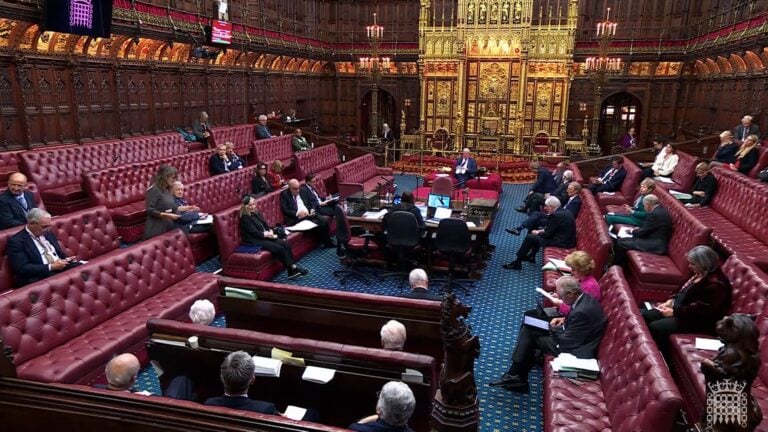
Crime and Policing Bill – Second reading
Baroness Kidron urged government to take stronger action to combat online child sexual abuse, violent pornography and AI misuse, and called for better support for bereaved families and vulnerable young people affected by digital harms.
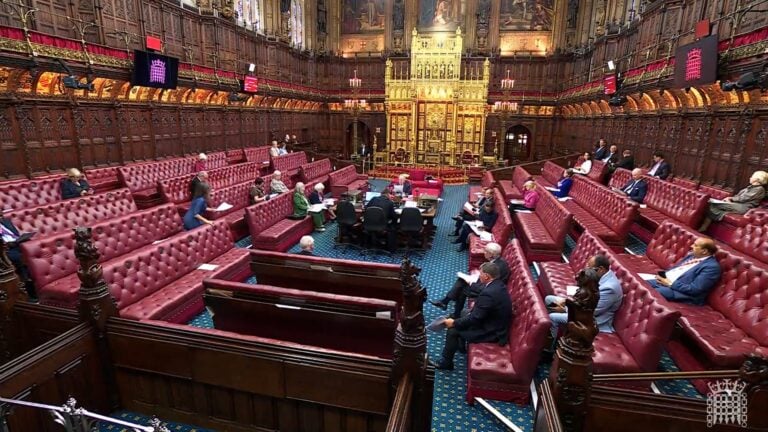
Children’s Wellbeing and Schools Bill – Committee stage
Baroness Kidron presented amendments calling for statutory standards on EdTech and filtering and monitoring systems in schools, and an amendment requiring the ICO to publish a code of practice for educational settings.
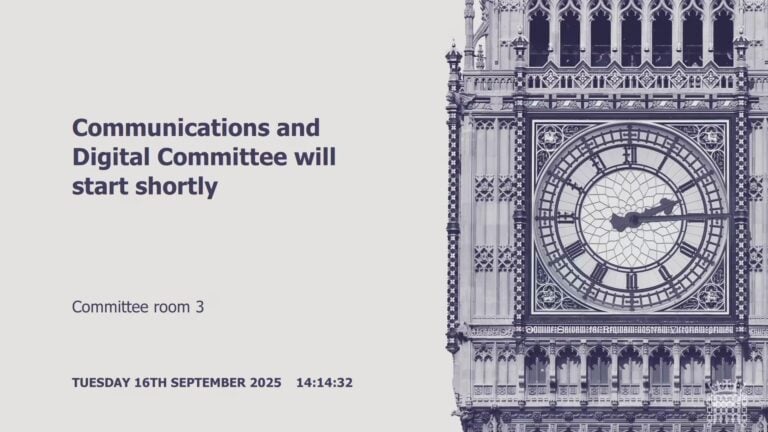
Online Safety Act – Communications and Digital Committee inquiry
Baroness Kidron gave evidence as part of the Lords Communications and Digital Committee Committee’s hearings into Ofcom’s proposed additional safety measures and implementation of the Online Safety Act. She called on Ofcom to take a more outcome-driven approach.
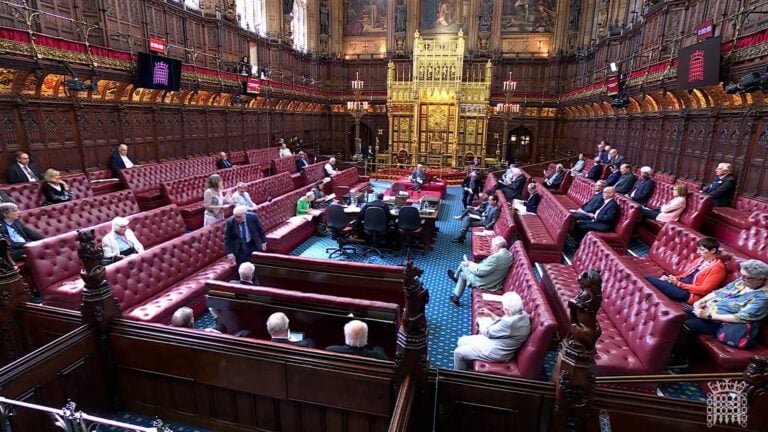
AI and creative technology scaleups: less talk, more action – Take note debate
Baroness Kidron debated the Lords Communications and Digital Committee's report on AI and the Creative Industries. She warned the government to think carefully about making NHS patient and UK CCTV data available to US tech, and that many policy decisions about UK data appear to be being made behind closed doors, excluding parliamentarians and UK AI.
Data (Use and Access) Bill – ping pong part 5
Baroness Kidron condemned the government for siding with big tech over the UK’s creative industries, accusing ministers of betraying millions of workers and allowing global tech to profit from British creators’ work without permission or payment.
Data (Use and Access) Bill – ping pong part 4
Baroness Kidron urged Lords to back another amendment protecting creators’ intellectual property and livelihoods, stressing respect for parliamentary process while condemning the government’s refusal to safeguard the UK’s creative industries.
Data (Use and Access) Bill – ping pong part 3
Baroness Kidron urged the Lords to defend the rights and livelihoods of UK creators by supporting an amendment that would protect their intellectual property from exploitation by tech companies, warning that failure to act now will leave the creative industries unprotected and undervalued.
Data (Use and Access) Bill – ping pong part 2
Baroness Kidron continued to fight for creative copyright holders by defending an amendment requiring the government to implement transparency rules and warning that inaction will irreparably damage the nation’s creative industries, economy, and cultural identity.
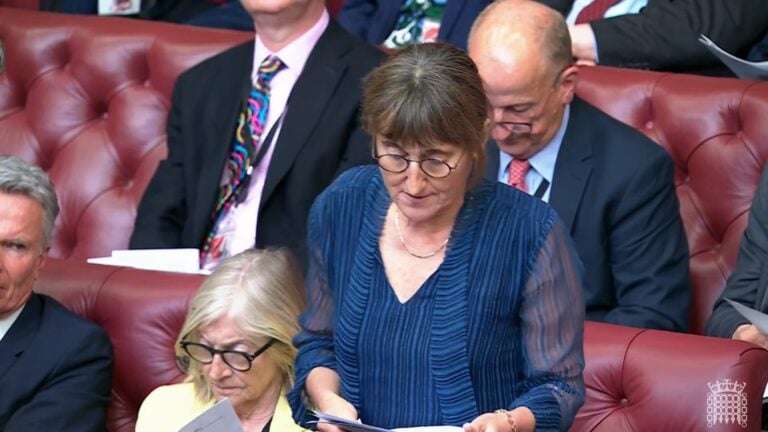
Data (Use and Access) Bill – ping pong part 1
As the Data returned to the Lords, Baroness Kidron defended an amendment requiring transparency over AI companies' use of copyrighted material, warning that government inaction is enabling tech forms to steal UK intellectual property, threatening the nation’s creative economy.
Smartphones in Schools – Take note debate
In a debate she brought forward as a Motion to Take Note, Baroness Kidron argued that smartphones and poorly regulated education technology are harming children’s learning, wellbeing, and development, calling for statutory restrictions on phone use in schools and stronger EdTech standards.
Data (Use and Access Bill) – Second reading
Baroness Kidron welcomed some improvements to the Bill, but criticised it for failing to make the UK AI-ready, protect data rights, or secure national value from UK-held data-sets.
‘Who watches the watchdogs?’ – Take note debate
In a debate on the Lords Industry and Regulators Committee report about regulation, Baroness Kidron highlighted the importance of technology regulation across domains. She warned of a shortage of AI expertise across goverment and regulators, and called for a parliamentary committee to oversee digital regulation.
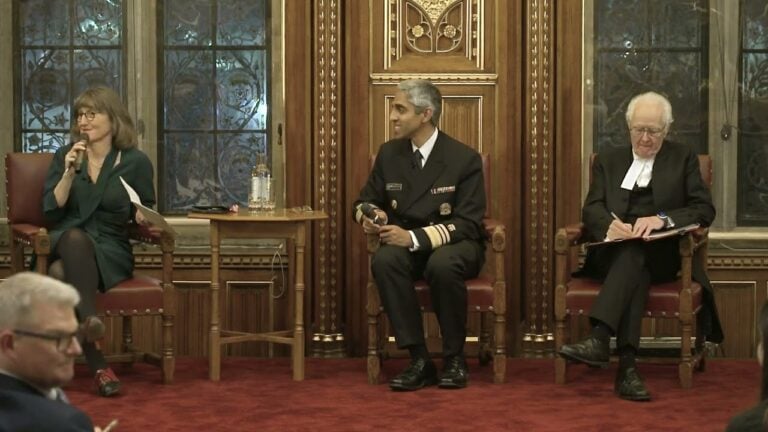
US Surgeon General Dr Vivek Murthy and Baroness Kidron on youth mental health | Lord Speaker Lecture
US Surgeon General Dr Vivek Murthy and Baroness Kidron discuss the need to address the growing youth mental health crisis, the risk that social media use poses, and how social connection can improve our overall well-being.
The Lord Speaker’s Lecture series invites members of the House of Lords and external experts to deliver lectures and answer questions on their specialist subjects or topics of interest.
The lectures enables members of both Houses and staff to hear expert opinion, fostering discussion and the exchange of information.
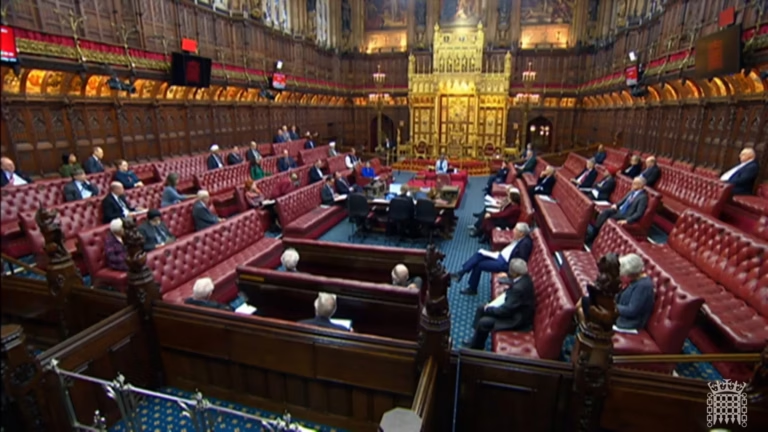
Artificial Intelligence (Regulation) Bill – Second reading
Whilst emphasising the value of regulating AI by domain, she defended the Bill due to government inaction on AI and its dangers. She suggested more references to children's rights, employment, public interest, and banned material.
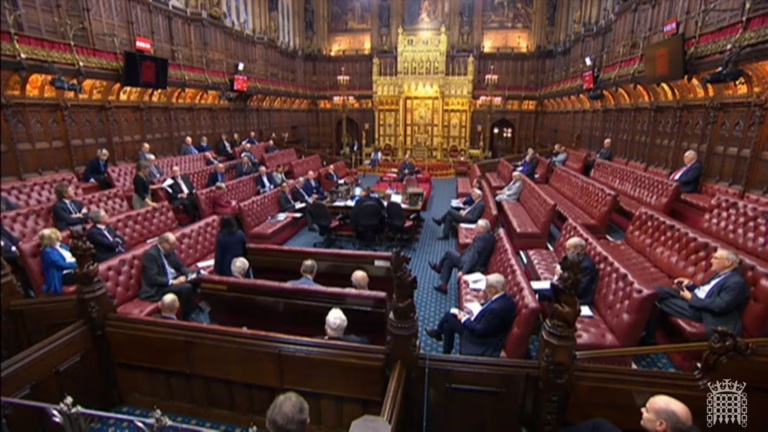
Digital, Markets, Competition and Consumers Bill – Report stage
Baroness Kidron supported a series of amendments to maintain the strength of the Competition and Markets Authority. She called for an explicit duty for the regulator to protect citizens' wider interests in a digital economy - not just those of consumers.
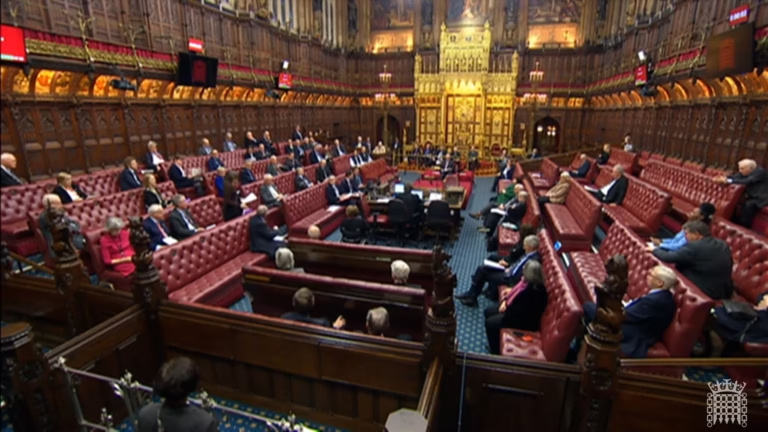
Media Bill – Second reading
Welcoming the Media Bill to the Lords, Baroness Kidron warned that narrowing public service broadcaster genre requirements risked undermining art, religious, and scientific content, urged inclusion of on-demand and app-store services, and argued the Bill lacked the vision to tackle misinformation or capitalise on trust in the BBC.
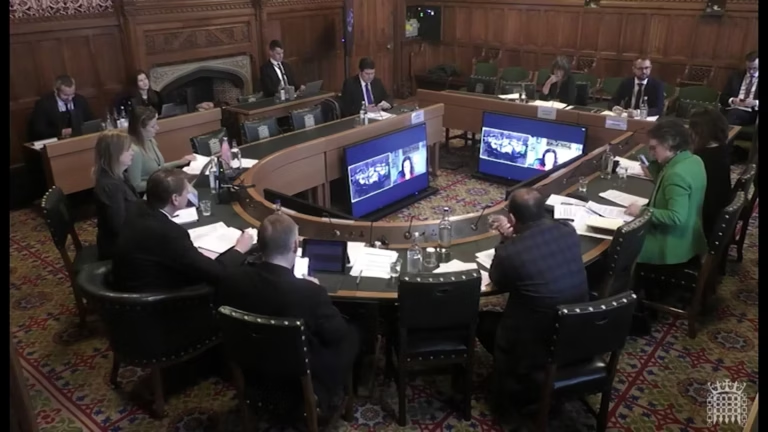
Screen Time – Education Committee inquiry
Giving evidence to the Commons Education Committee's inquiry, Baroness Kidron told MPs that in the current situation in which the government does not issue mandatory standards for digital technology and much of it is developed for profit, its impact on children is usually negative.
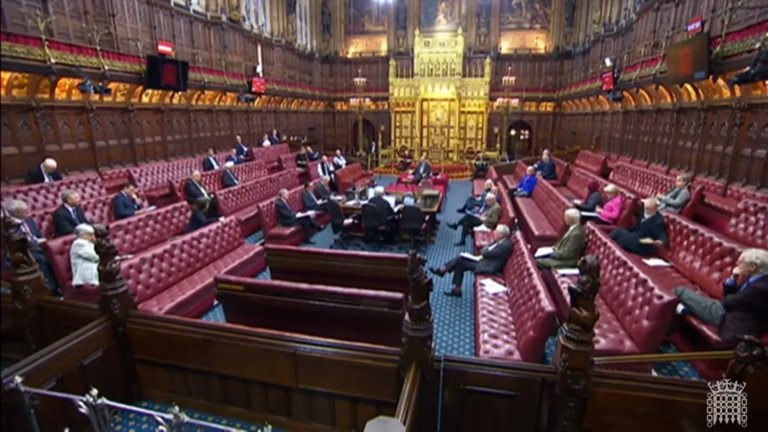
Data Protection and Digital Information Bill – Second reading
Baroness Kidron warned that the Bill would weaken vital child data protections and renege on promises to bereaved parents. She urged the government to preserve the AADC, strengthen privacy in schools, and introduce more measures to protect children from AI harm.
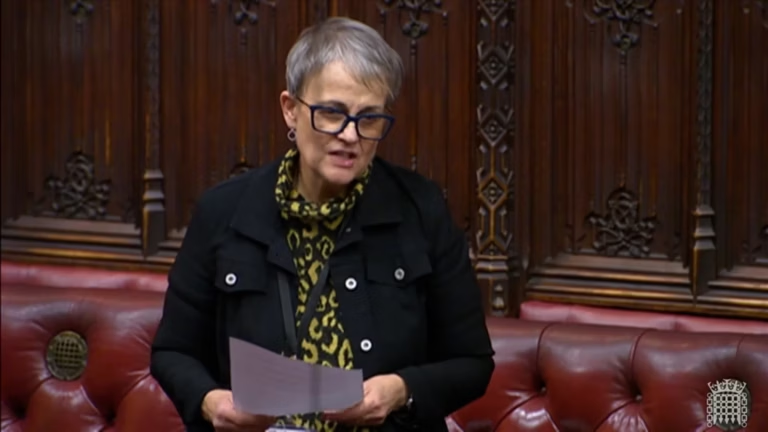
Digital Markets, Competition and Consumers Bill – Second reading
Baroness Kidron warned that excessive consultation and loopholes could weaken the regulator's authority. She urged parliament to resist tech lobbying and ensure that consumer redress and democratic accountability remain central to the UK's digital future.
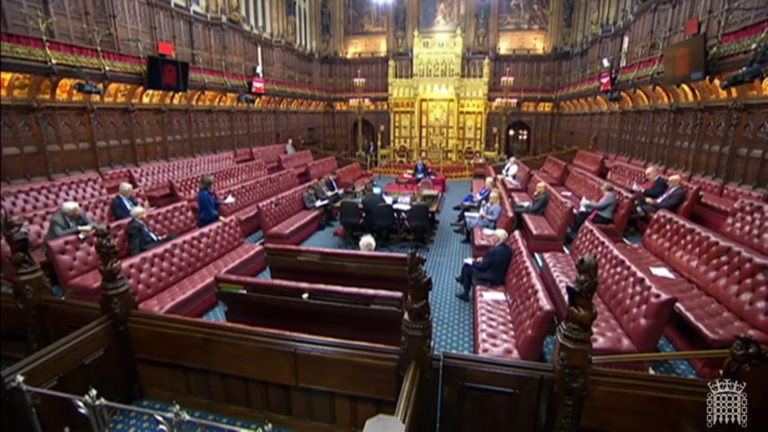
Early years education – Take note debate
In a Motion to Take Note, Baroness Kidron argued that weak oversight of EdTech exposes children to poor learning tools, commercial exploitation, and privacy risks. She called on government to ensure technology supports children's education and wellbeing with EdTech certification and stronger data protection.
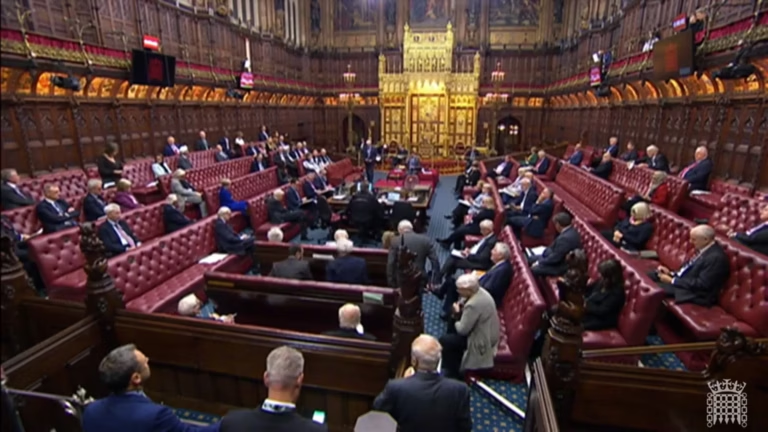
King’s Speech
Baroness Kidron argued that AI's dangers, including misinformaiton, copyright abuse, and harms to children, are not future risks but present realities. She criticised government complacency and called for immediate action to enforce existing laws and prioritise children's rights and AI safety.
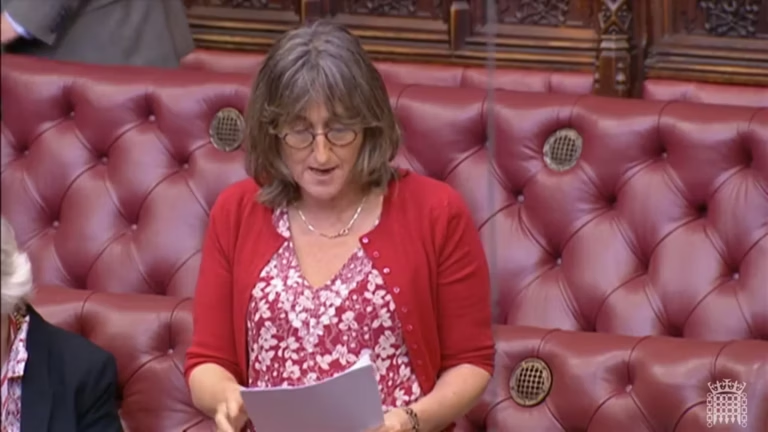
Online Safety BIll – Report stage part 3
After the Government brought forward amendments to the Online Safety Bill empowering coroners to access data when investigating a child's death, Baroness Kidron paid tribute to bereaved families' campaigning for the amendments. However, she said that what bereaved families really want is online services to be safe by design.
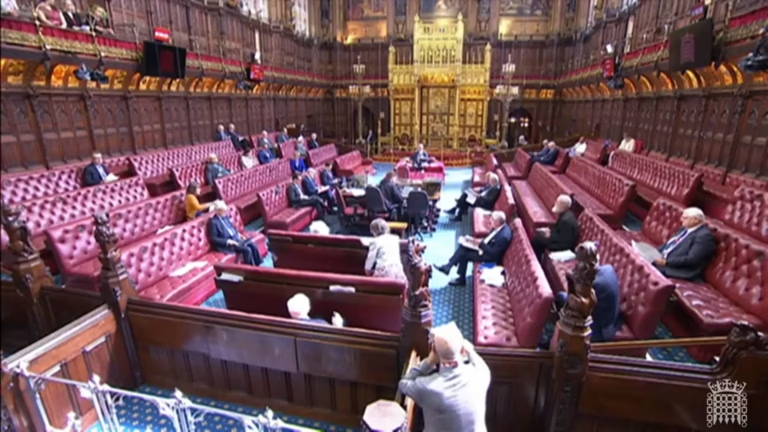
Online Safety Bill – Report stage part 2
Baroness Kidron tabled amendments aimed at strengthening coroners' powers to investigate child deaths. She suggested that Ofcom provide formal guidance and training for coroners, redefining online users as consumers with consumer rights, and closer collaboration between regulators.
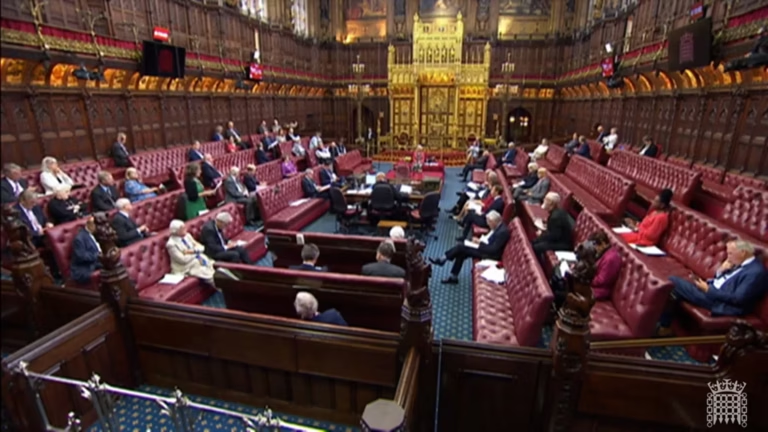
Online Safety Bill – Report stage part 1
Baroness Kidron welcomed stronger age assurance laws requiring highly effective systems to block children's access to pornography and align with the AADC. She insisted these must be rapidly implemented, clearly enforced, and privacy preserving.
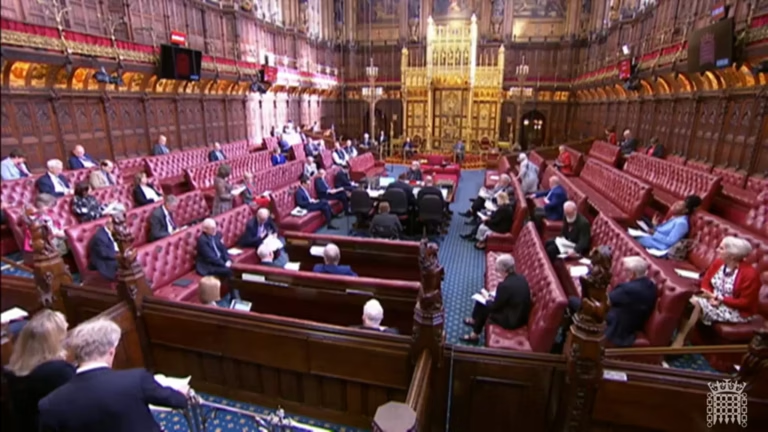
Online Safety Bill – Committee stage
Baroness Kidron introduced amendments, with cross-party consensus, which would establish strong, privacy-preserving age assurance standards and protect children from online harm. She stressed that these provisions must be clearly and robustly enforced.
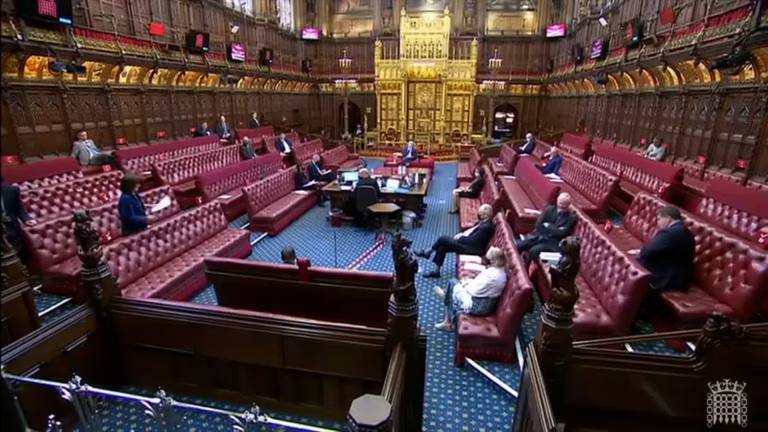
Public Service Broadcasting – Take note debate
Debating a Communications and Digital Committee report on public service broadcasting, Baroness Kidron argued that, in an increasingly fragmented media landscape dominated by global services, the UK urgently needs a fairly and well-funded, national public broadcaster to provide shared cultural space, collective identity, and trusted information.
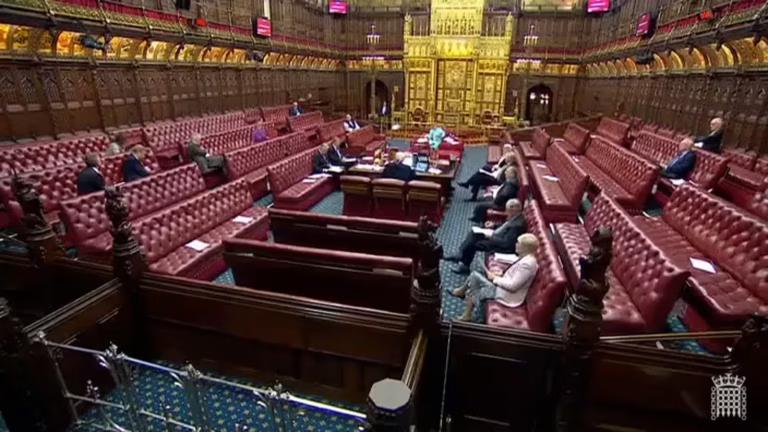
Regulating in a Digital World – Take not debate
Discussing the Communications and Digital Committee report that she helped to write, Baroness Kidron argued that powerful tech companies talk about supporting regulation, but then routinely block it, meaning that government must back strong, enforceable rules to protect users, especially children.